

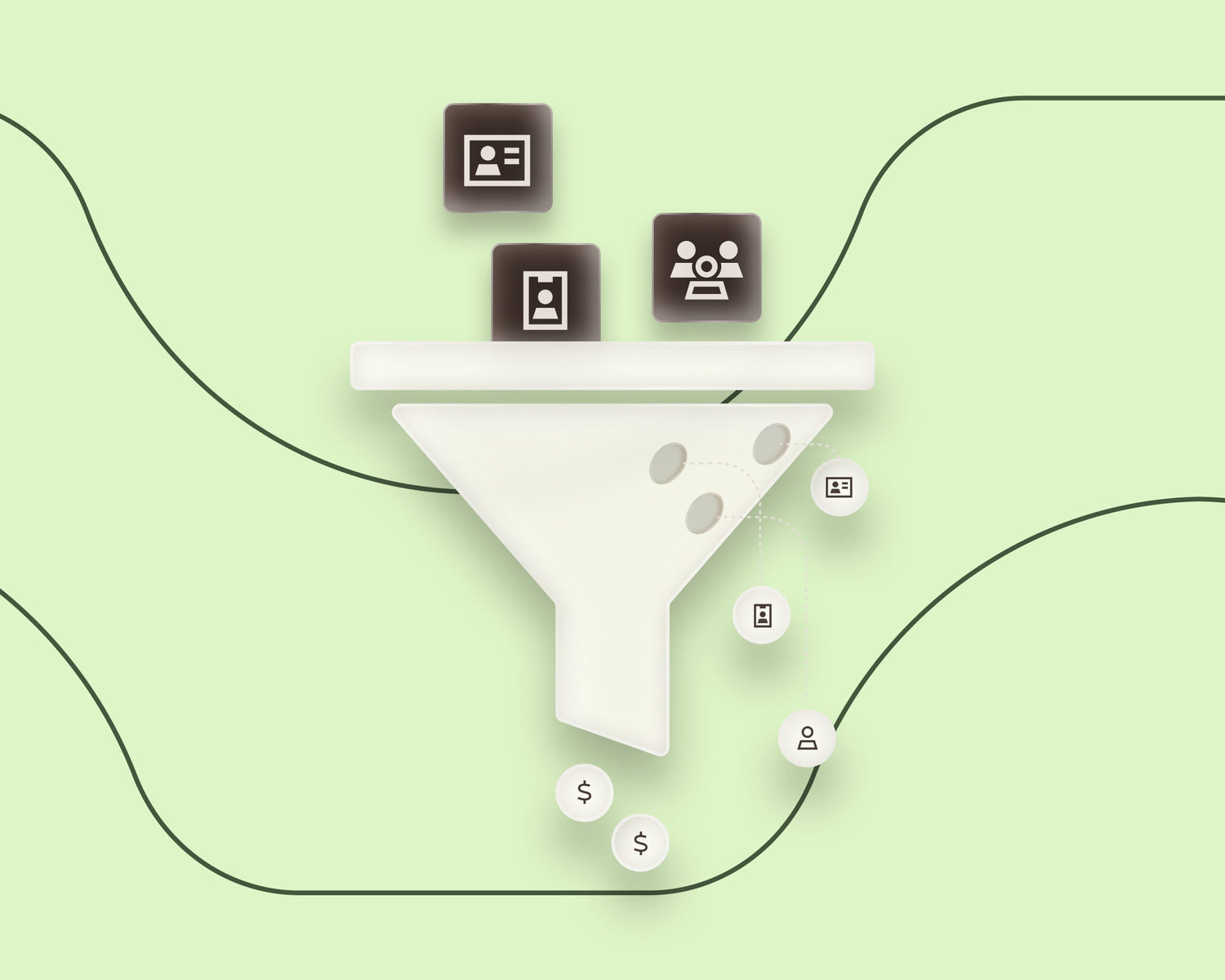

Up to 80% of event leads never make it into companies' CRMs. That's one of the most persistent event lead capture problems in B2B sales. And it's not caused by bad reps or low-traffic booths. It's caused by dated, glitchy tools.
Your team shows up, works the floor, has great conversations, and scans hundreds of badges. But somewhere between the expo hall and your sales pipeline, the majority of those opportunities quietly disappear. Delayed CSV files. Missing contact data. A follow-up email that finally goes out three weeks after the show, when your prospect has already moved on.
The good news? These lead capture tool problems are predictable and preventable. Here's a look at the six most common reasons event lead capture fails, the mistakes that make those problems worse, and the event lead capture best practices that top-performing teams use to fix them.
6 reasons why event lead capture fails

1. They only work at specific events
Event-provided rental lead capture is single-use by design. They're built for one trade show and useless everywhere else. That means every new conference requires a new app, login credentials, and training session before your team can get to work.
Field marketers know this retraining cycle well. One described being forced to "retrain myself and the sales group every time," pulling reps away from selling just to figure out yet another clunky interface. The frustration compounds quickly across a busy event calendar.
The problem gets worse at smaller events. Regional networking happy hours, industry meetups, and invite-only dinners rarely come with an official lead retrieval system. Without a universal tool, reps fall back on paper business cards and handwritten notes. And when a rep leaves the company, those leads walk out the door with them.
This is one of the most common event lead capture problems teams face, and one of the easiest to solve. A universal event lead capture platform eliminates it entirely. One app. One workflow. Every event.
2. They capture data but don't enrich it
Standard event scanners return whatever an attendee typed into the registration form. That typically means a name, a company, and maybe a job title — if you're lucky. Phone numbers, verified work emails, LinkedIn profiles, and company firmographics are rarely included.
That incomplete data creates a bottleneck before follow-up can even begin. Marketing teams are forced to spend hours manually researching contacts, cross-referencing Salesforce, and pulling records from separate tools like ZoomInfo just to fill in the gaps. It's repetitive data entry work that delays outreach by days. And it's one of the most avoidable lead capture tool problems.
Modern AI-powered lead capture platforms solve this at the point of capture. Waterfall enrichment automatically fills in verified emails, direct phone numbers, LinkedIn profiles, and company firmographics in seconds, including company size, industry, revenue, tech stack, and funding history. The industry standard match rate sits around 65%. Leading platforms like Popl deliver 95%+, meaning most leads are outreach-ready before your rep has finished the conversation.
3. They have no CRM integration
This is where event lead capture fails become painfully obvious. Without native CRM syncing, the process looks like this: wait days for the organizer to release a CSV, download it, scrub it, reformat it, deduplicate it, and manually import it. One field marketer described her process as a "convoluted mess," dissecting a raw file into six tabs and spending about 15 minutes per name manually fixing formatting issues just to get her CRM to accept the upload.
The real cost of that delay isn't the time spent cleaning data; it's the leads that go cold while you're doing it. As one sales leader put it, a week-long delay means "that something hot, you're giving it a chance to cool off." Another warned that if you don't follow up immediately, the prospect's interest "could die."
And if you want to bypass the CSV process entirely with a rental scanner? Many event organizers charge API connection fees of up to $1,000 per show just to let your data flow directly into your CRM.
Native CRM integration isn't a nice-to-have; it's the difference between a warm lead and a cold one. The right platform syncs enriched contacts directly into Salesforce, HubSpot, Microsoft Dynamics, Marketo, or Pardot in seconds, with custom field mappings, automatic deduplication, and smart routing built in.
4. They don't work offline
Anyone who has exhibited at a major trade show knows what happens to the venue Wi-Fi when 10,000 attendees and exhibitors all connect at once: it slows to a crawl or fails completely. Cloud-dependent apps go down with it.
Traditional lead capture tool problems don't stop there: many pull in so much data that they strain even dedicated internet connections. One field marketer noted she was forced to purchase expensive dedicated internet at every single trade show because the venue's free Wi-Fi couldn't support the standard app. When connectivity dropped anyway, reps were left scrambling: downloading apps on the fly, photographing badges, and transcribing notes manually after the fact.
Offline-first design is the only architecture that works reliably on a trade show floor, and the absence of it is one of the most frustrating lead capture tool problems exhibitors run into. Leads should be stored locally on the device the moment they're captured, regardless of connectivity. The instant a connection returns, those queued scans should automatically sync, run through enrichment, and push into your CRM.
When evaluating any lead capture platform, ask directly: does the app store scans locally when offline? The answer tells you whether the platform was built for real show-floor conditions or just assumed the Wi-Fi would cooperate.
5. They're too expensive per event
The economics of renting badge scanners don't hold up under scrutiny. A single rental scanner typically runs $500 to $800 per user, and that cost resets at every event. One marketing leader estimated her team was spending $2,000 to $4,000 per trade show just for the lead generation app and the internet access required to run it. Another noted that some organizers charge $1,000 just for the right to access your leads immediately rather than waiting two weeks for the file.
Beyond the dollar cost, there's no alignment between what you spend and what you get: you pay the same whether an event produces 20 leads or 2,000.
Usage-based pricing tied to leads captured changes that equation entirely. Costs scale with outcomes, not headcount or event count. Teams can run unlimited events, add reps without inflating their bill, and justify every dollar spent with a direct line to pipeline.
6. They return low-quality data
Even when rental scanners function as intended, the data they return is often unreliable. Attendees routinely register with personal Gmail or Hotmail addresses (or outright fake emails) to avoid vendor outreach. One sales professional estimated that up to 50% of attendees provide invalid email addresses. That means marketing teams inherit lists riddled with undeliverable contacts that require manual cleanup before a single follow-up can go out.
Hardware quality creates additional problems. Badge printing inconsistencies, poor QR code resolution, and dim expo hall lighting can render badges physically un-scannable. When the trade show lead capture device fails, reps are stuck taking photos or transcribing details by hand.
And standard event forms rarely capture the qualifying context your sales team actually needs — things like the software a prospect currently uses, their purchase timeline, or their decision-making authority. That missing context forces reps to start discovery calls from scratch, rather than walking in prepared.
Event lead capture mistakes that make things worse

Broken tools create event lead capture problems. Broken processes make those problems worse. Even teams using decent platforms regularly undermine their own results with these avoidable mistakes:
Waiting until the event to set up the platform
Configuring qualifying questions, CRM field mappings, and follow-up automations on the show floor is a recipe for inconsistent data and missed leads. The best teams build out their event campaigns before they arrive, so reps can start scanning and qualifying from the first conversation.
Skipping qualifying questions entirely
Badge scans without context are just contact records. Reps who capture a name and company but nothing else hand off leads with no signal of buyer intent. A few well-chosen qualifying questions, such as purchase timeline, current tools, and decision-maker status, take seconds to complete and dramatically improve the quality of every sales handoff.
Treating all leads as equal
Not every badge scan represents the same opportunity. Without tagging and lead scoring, post-event routing becomes a guessing game. Teams that use event tags to mark priority accounts, flag demo requests, or segment by product interest prioritize leads instantly (instead of days later).
Delaying follow-up until after the show
Every hour between a scan and a follow-up is an hour your competitor has to reach the same prospect first. Research shows that 78% of B2B buyers purchase from the first vendor to reach out. Automated follow-up emails triggered at the point of capture ensure that no lead waits — even if your rep is still working the floor.
Failing to measure event ROI
If your team can't tie specific events to closed pipeline, you can't make confident decisions about where to invest next. Teams that rely on post-event spreadsheet exports rarely have the clean attribution data needed to answer leadership's inevitable question: was this event worth it? CRM-native event tagging and attribution dashboards answer that question before anyone has to ask.
Event lead capture best practices: What top-performing teams do differently

The teams that consistently generate strong pipeline from events have moved away from event-specific rentals and toward a single, universal platform. Here's what that looks like in practice:
Use one platform for every event
A universal badge scanner app eliminates common event lead capture problems, from retraining reps to scrubbing messy CSVs. Standardizing lead capture lets your team focus on conversations instead of technology logistics.
Enrich data at the point of capture
AI-powered enrichment runs the moment a badge is scanned, returning verified contact and company data in seconds.
Sync leads to your CRM in real time
Native integrations replace CSV cleanup entirely. Leads instantly flow directly into your sales stack with proper field mappings, deduplication, and routing.
Qualify on-site with notes, tags, and questions
Customizable qualifying questions appear immediately after a scan, capturing buyer intent. That context syncs directly to your CRM, so sales reps can prioritize follow-ups.
Book meetings on the show floor
A prospect's interest is highest during a great booth conversation. Calendar integrations with tools like Chili Piper, Google Calendar, and HubSpot let reps lock in next steps before leaving the expo hall, rather than chasing them via email for two weeks afterward.
Follow up within 24 hours
Automated follow-up emails triggered at the point of scan ensure every lead receives timely outreach.
Measure event ROI with attribution dashboards
When enriched leads flow directly into your CRM with event tags, rep assignments, and campaign data, marketing leaders can finally answer the question they're always asked: which shows are actually generating pipeline?
How Popl addresses these problems

Popl's event lead capture platform is built on the best practices outlined above. The universal badge scanner works at any event without API integrations. Enrichment runs automatically at the point of capture, delivering 95%+ match rates. And leads sync directly to your CRM in seconds. No CSV cleanup required.
Reps can qualify leads on-site, trigger automated follow-up emails from the show floor, and book meetings before leaving the booth. Attribution reporting shows marketing leaders which events and reps generate revenue, making jusitfying spending easy.
Book a personalized demo to see how Popl can solve your toughest event lead capture problems today.

![[Featured image / hero]: Abstract graphic of a handshake with negotiation and deal elements (contract, dollar signs, balance scale) in the background. Keep this one as the only abstract graphic to anchor the article.](http://popl.co/cdn/shop/articles/11_Post-event_sales_techniques_to_close_more_deals_42a2a532-7b2d-461b-a6e6-d6519f8cd106.png?v=1779890225&width=600)


